

Simple Ways to Get Smooth Walls and Long-Lasting Color
Common interior painting mistakes and how to avoid them starts with good prep, the right tools, and patience. Many paint problems happen before the first brush stroke. Skipping prep, using cheap supplies, or rushing dry time can lead to peeling, streaks, and uneven color. The good news is most of these issues are easy to prevent with a clear plan and a few smart habits.
What You Need Before Starting
Before you begin interior painting, gather the right supplies. This helps you work faster and get better results. You do not need fancy gear, but quality tools make a big difference.
- Drop cloths to protect floors and furniture
- Painter’s tape for clean edges
- Spackle and putty knife for small holes
- Sandpaper for rough spots
- Primer matched to your wall type
- High-quality brushes and rollers
- Stir sticks and paint trays
Good prep tools matter just as much as good paint. Rushing this stage often leads to the most common mistakes.
Step-by-Step Process for Better Results
Follow these steps to avoid problems during interior painting. Each step builds on the one before it.
- Move or cover furniture and lay down drop cloths.
- Clean the walls to remove dust and grease.
- Patch holes and dents with spackle. Let it dry.
- Sand patched areas until smooth.
- Apply painter’s tape along trim and ceilings.
- Prime the walls if needed, especially over dark colors or stains.
- Stir the paint well before pouring into a tray.
- Cut in around edges with a brush.
- Roll paint in a V or W pattern for even coverage.
- Let the first coat fully dry before adding a second coat.
Skipping or rushing any of these steps often leads to uneven color or peeling.
Common Mistakes to Avoid
Many homeowners make the same errors during interior painting. Knowing them ahead of time can save hours of extra work.
- Skipping primer: This can cause stains to bleed through or paint to peel.
- Using the wrong finish: Flat paint in high-traffic areas can mark easily.
- Not mixing paint: Color can look different from one wall to another.
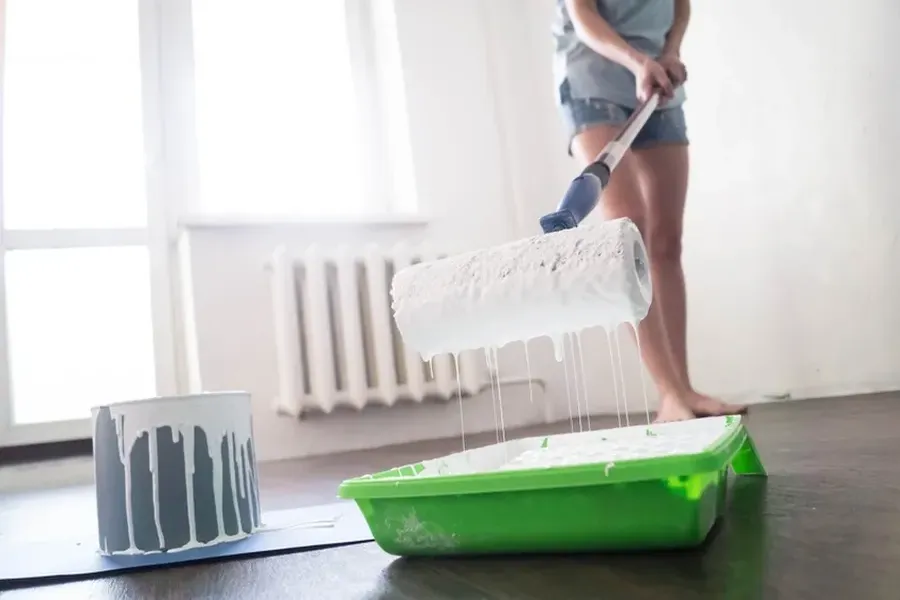
- Overloading the roller: This leads to drips and thick spots.
- Removing tape too late: Fully dry paint can peel with the tape.
- Painting over dirty walls: Dust and grease stop paint from sticking.
Another common issue is poor ventilation. Open windows or use fans. This helps paint dry evenly and keeps odors low.
When to Call a Professional
Some projects are harder than they look. High ceilings, textured walls, and major repairs take skill and time. If your walls have water damage or large cracks, you may need more than basic interior painting. A trained crew can handle repairs, surface prep, and clean lines around trim and ceilings.
If you are updating multiple rooms or planning a full service project, hiring a team can reduce stress and speed up the timeline. Professional painters also know which products hold up best in busy homes.
Final Recommendation
Taking time to prep, using quality tools, and following a clear process can prevent most interior painting problems. Small steps like cleaning walls and letting each coat dry fully make a big difference in the final look. If you want help with your project in Staten Island, NY, we are ready to assist. At Garcia Remodeling LLC, our team handles repairs, prep work, and full interior painting services with care and attention to detail. Call (718) 541-0911 to schedule your next project and let us help you get smooth, lasting results you can feel proud of.